
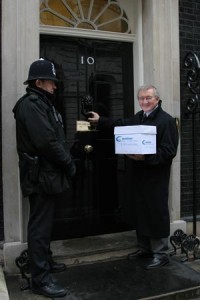
Dr Chris Steele handed in a petition to 10 Downing Street today, calling on the UK Government to help improve the diagnosis of coeliac disease - a condition with which he has just been diagnosed. 8,783 people (yes, including me - did you sign?) are asking the Government to find the half-million people in the UK at risk from undiagnosed coeliac … [Read more...]
Glad to be coeliac: osteoporosis, the hidden threat

We caught the end of a programme on Radio 4 this afternoon, while driving, which caught my daughter's attention. "Like me!" she said, when the speaker revealed that she'd been diagnosed with coeliac disease. The programme was actually about new treatments for ostoporosis, but - helpfully - the risks of developing osteoporosis as a result of … [Read more...]
Coeliac disease, diagnosis and petitions
If you're a UK citizen, and are concerned about those people who have undiagnosed coeliac disease, then please consider signing the petition now available via the 10 Downing Street site. It is asking 'the Prime Minister to find the half million people in the UK at risk of serious damage to their health from undiagnosed coeliac disease by … [Read more...]